KLABU'sImpact
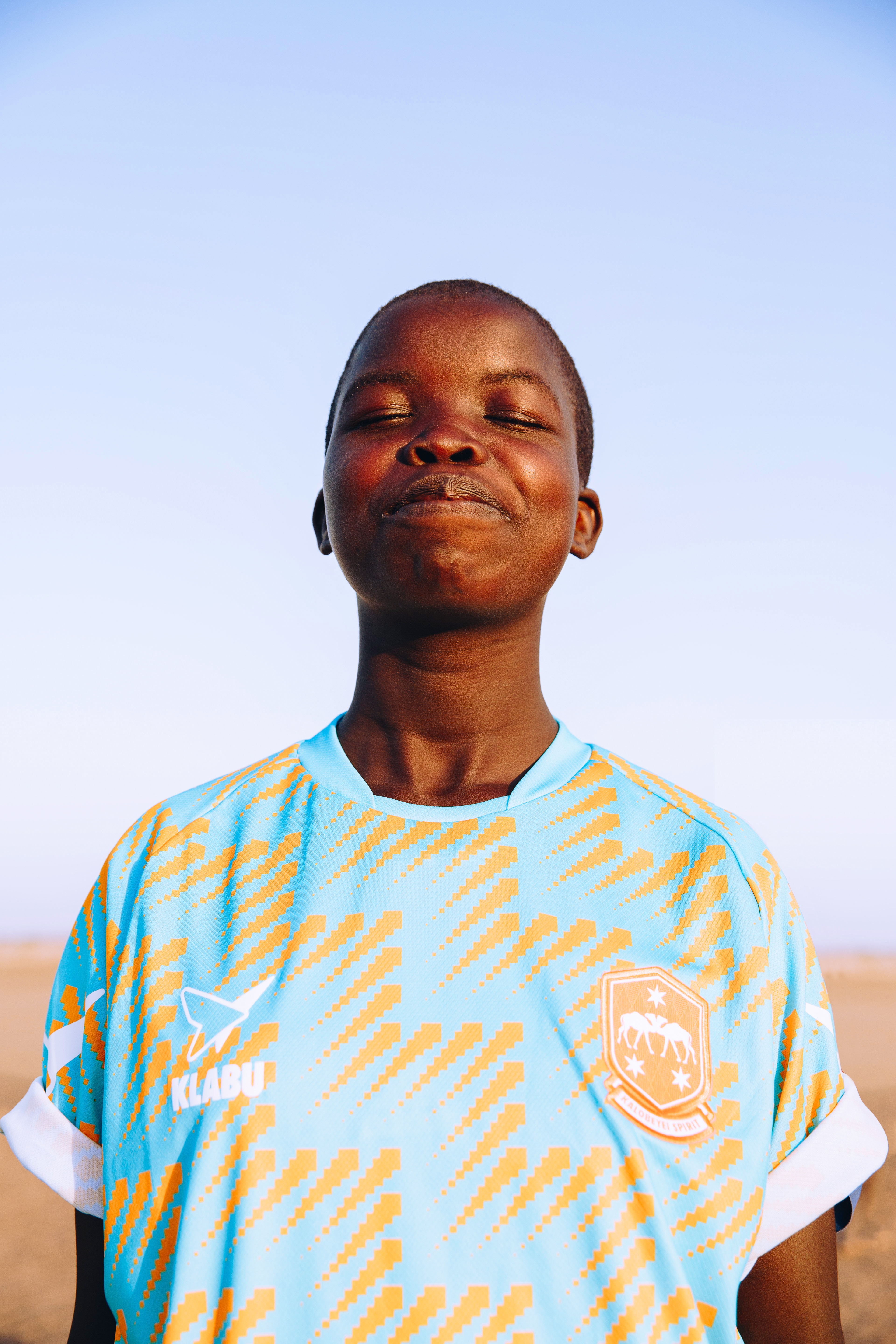
Across the globe, sports activities bring joy to people. Sports are also good for health, they promote important values such as fair play and they rally people together. These and other benefits are well-known. But in addition, why do we use sports to support refugees?
To answer this question one first needs to understand the context. Escaping from war and persecution, refugees have left everything behind: relatives and friends, their belongings, their country. They find safety abroad but that is often about all.
Many are traumatised. Many have to live in harsh conditions, in urban slums or refugee camps where there is no secondary education and where they depend on aid as paid jobs are not accessible for them. Solutions can take years, meanwhile refugees sit idle in camps, frustration sets in and human potential is wasted.
Obviously sports cannot solve all these problems, but they can make a big difference in the lives of refugees rebuilding their lives away from home.
At KLABU, we see the power of sport to change lives every day, on the ground, in the camps and through our programmes around the world.
Specifically, we think about how sport can change lives in two ways: by strengthening the resilience of refugees to cope and grow in a very difficult situation, and by increasing acceptance and integration of refugees through connection.
For a deeper dive into the effects, outputs and inputs of our work, please see our Theory of Change focused on these two core impact goals: coping and connecting. If you are interested in the full detailed version, please to us at info@klabu.org.
Read more
00:00
"A healthy mind in a healthy body: sport is my cure."
Impact Goal 1 ("Coping") - strengthening the resilience of refugees not only to cope with but to grow in a very difficult situation:
- Improving refugee mental and physical wellbeing:
Through KLABU sports and clubhouse activities, we support refugees reconnect with feelings of joy, pride and hope, which some have missed for so long. We fight lethargy and indifference and help build confidence and trust. Through the clubhouse and sport activities, refugees strengthen their resilience. This may even have a healing effect on past traumatic experiences.
- Enhancing social cohesion and community building:
The clubhouses foster a strong sense of community among refugees, offering a shared space that is inclusive and welcoming to all, regardless of nationality or tribe. This environment encourages community pride and belonging and can reduce potential tensions between different groups. Through sports and clubhouse activities, refugees are able to engage in positive interactions with individuals from different backgrounds, which breaks down barriers and promotes unity among diverse refugee populations.
- Increasing employment opportunities and life skills:
KLABU stimulates initiative and develops life skills such as team work, communication and project management. That’s why our clubhouses are led by refugees for refugees. Managing the clubhouse and benefiting from mentorship enhances the employability of clubhouse managers, equipping them with valuable skills for future projects and endeavors.
Our clubhouses’ solar power and Wi-Fi connectivity give people the tools to study, work and build a brighter future. Moreover, other local and refugee-led organisations are welcome to use the facilities for their programs focused on health, entrepreneurship and education.
- Encouraging women and girls’ empowerment:
We actively promote women and girls' empowerment by encouraging their participation in sports, through active mobilisation and the organisation of their favourite activities. Through those, women and girls gain confidence, boost their self-esteem, and strengthen their sense of self-worth. It positively impacts various aspects of their lives, including their capacity to become role models for younger girls. The clubhouse also offers a space for women and girls to build new friendships, expand their social networks, and improve their overall well-being.
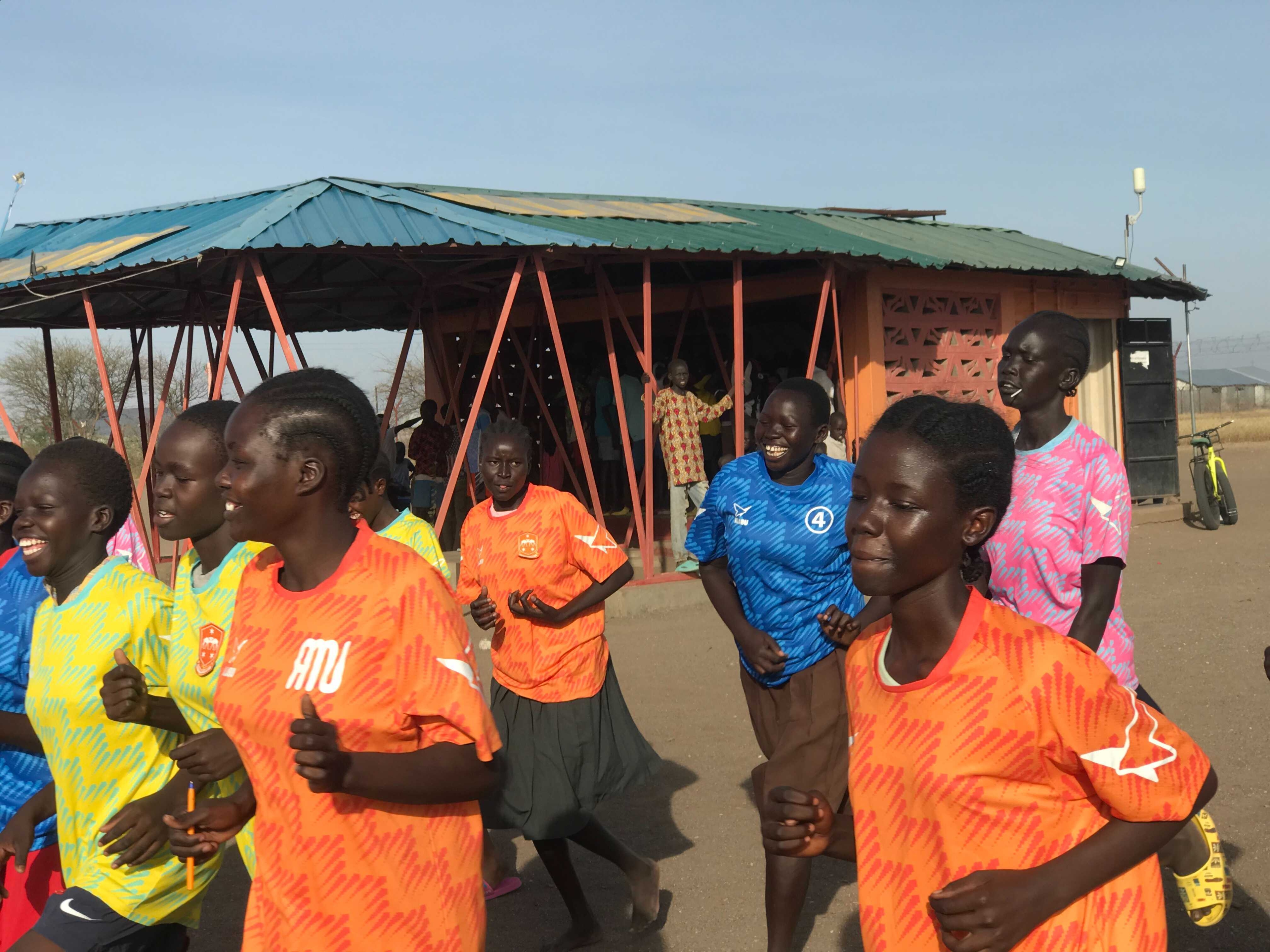 The joy of Nyagoa's girls' run club in Kalobeyei, Kenya
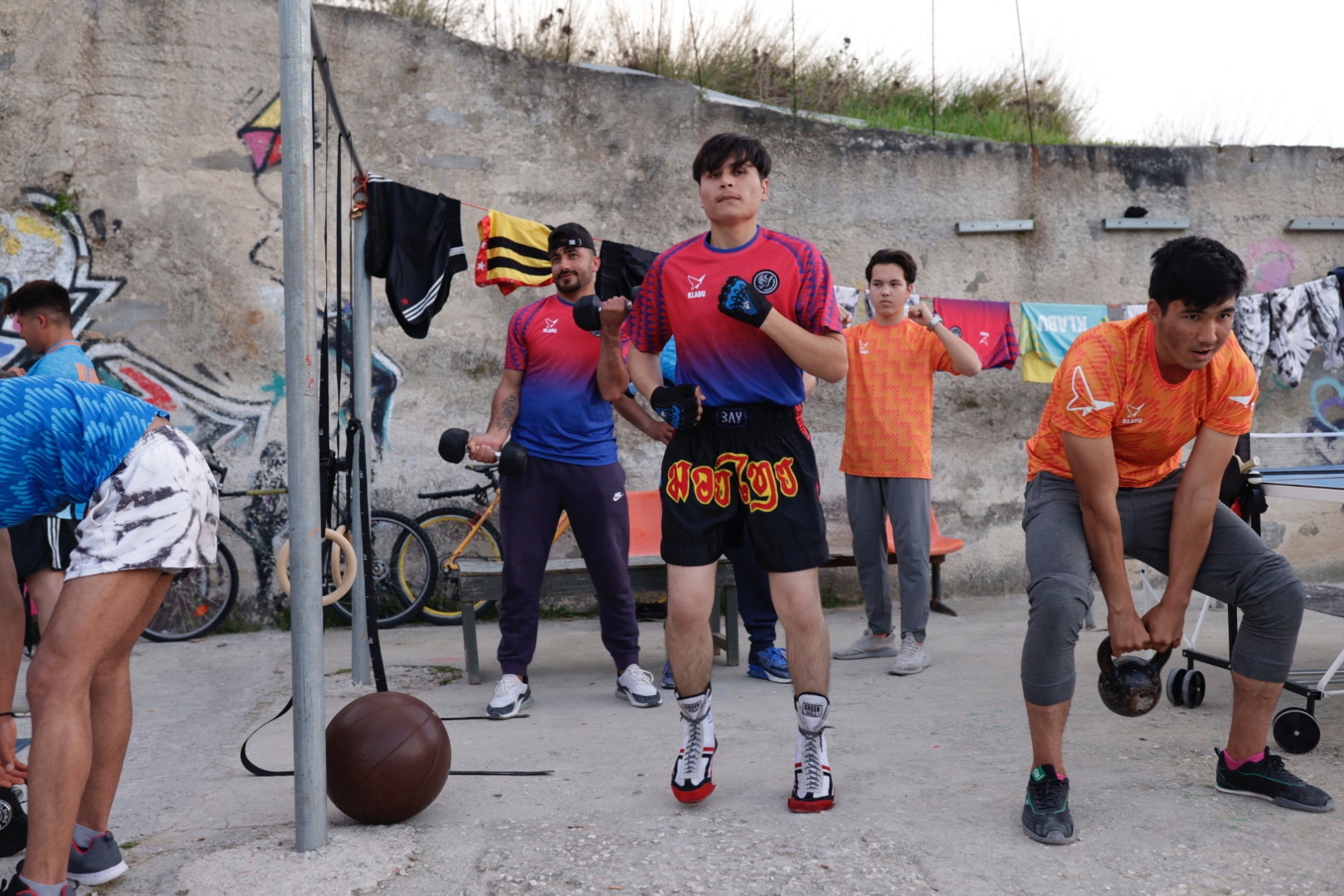 Workout in Lesvos organised by Rustem
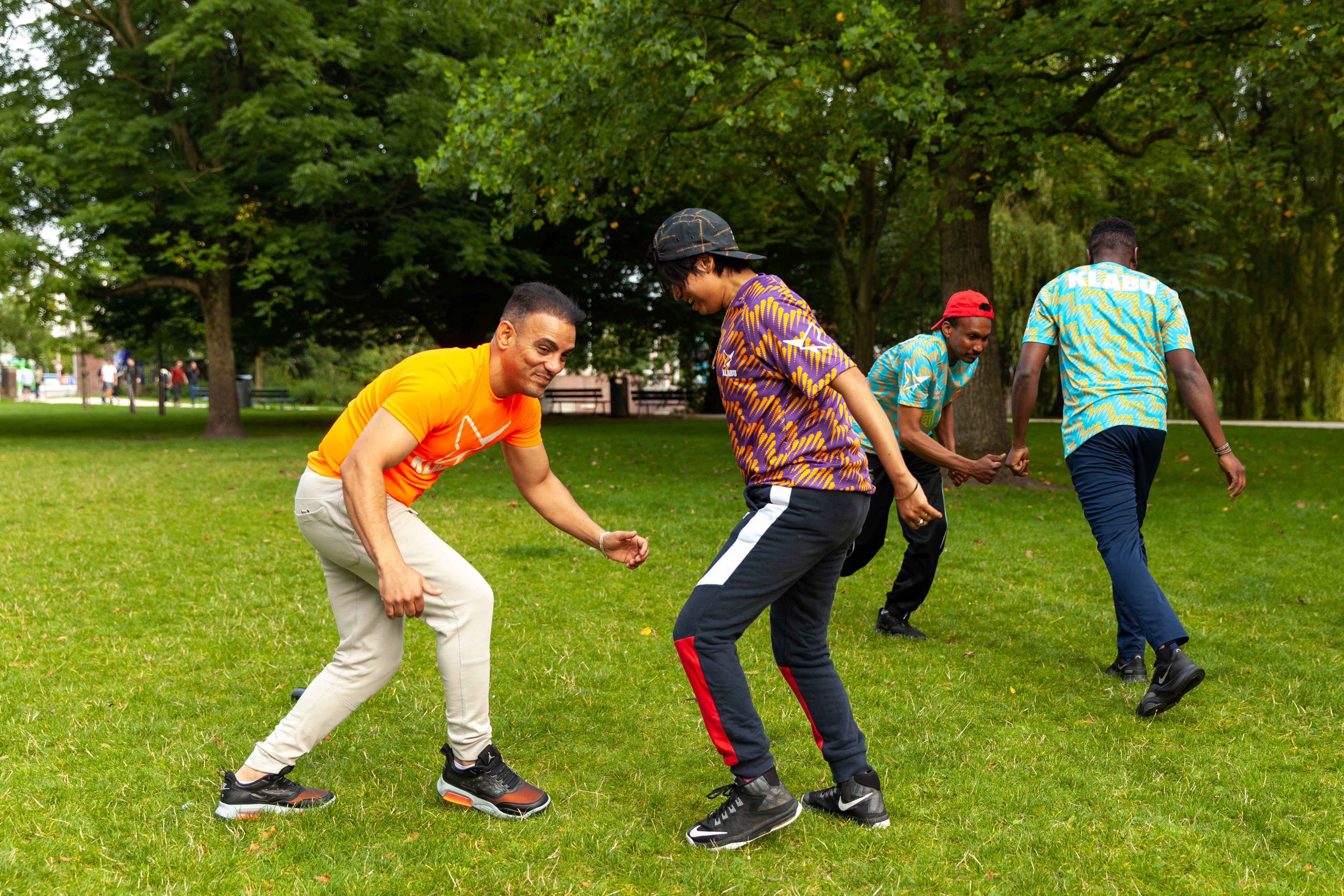
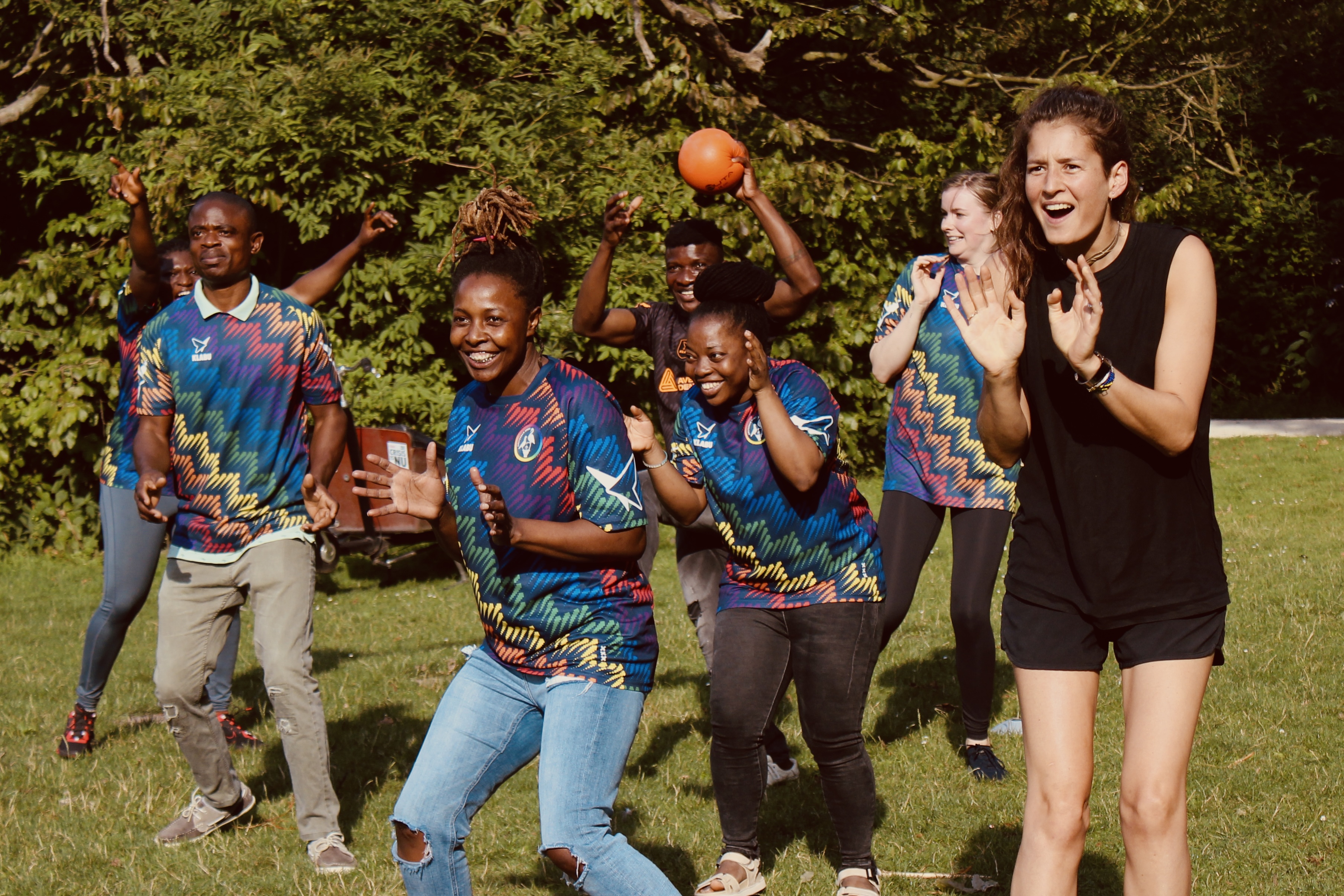 KLABU workout in Amsterdam
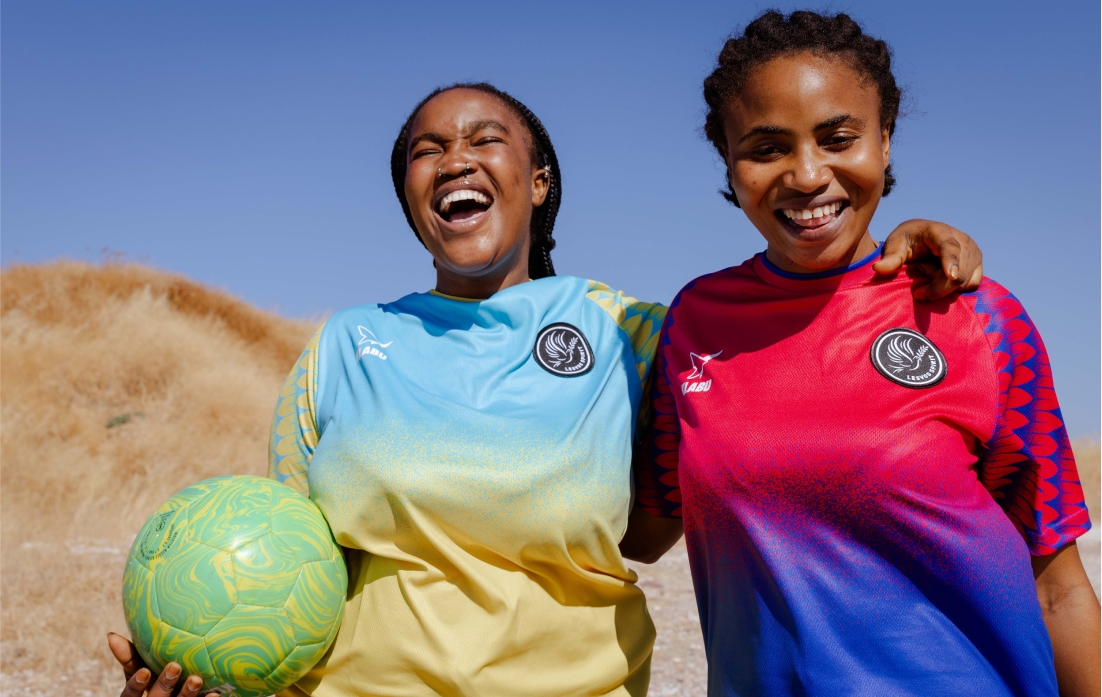 Sara and Frances' unbeatable spirit in Lesvos, Greece
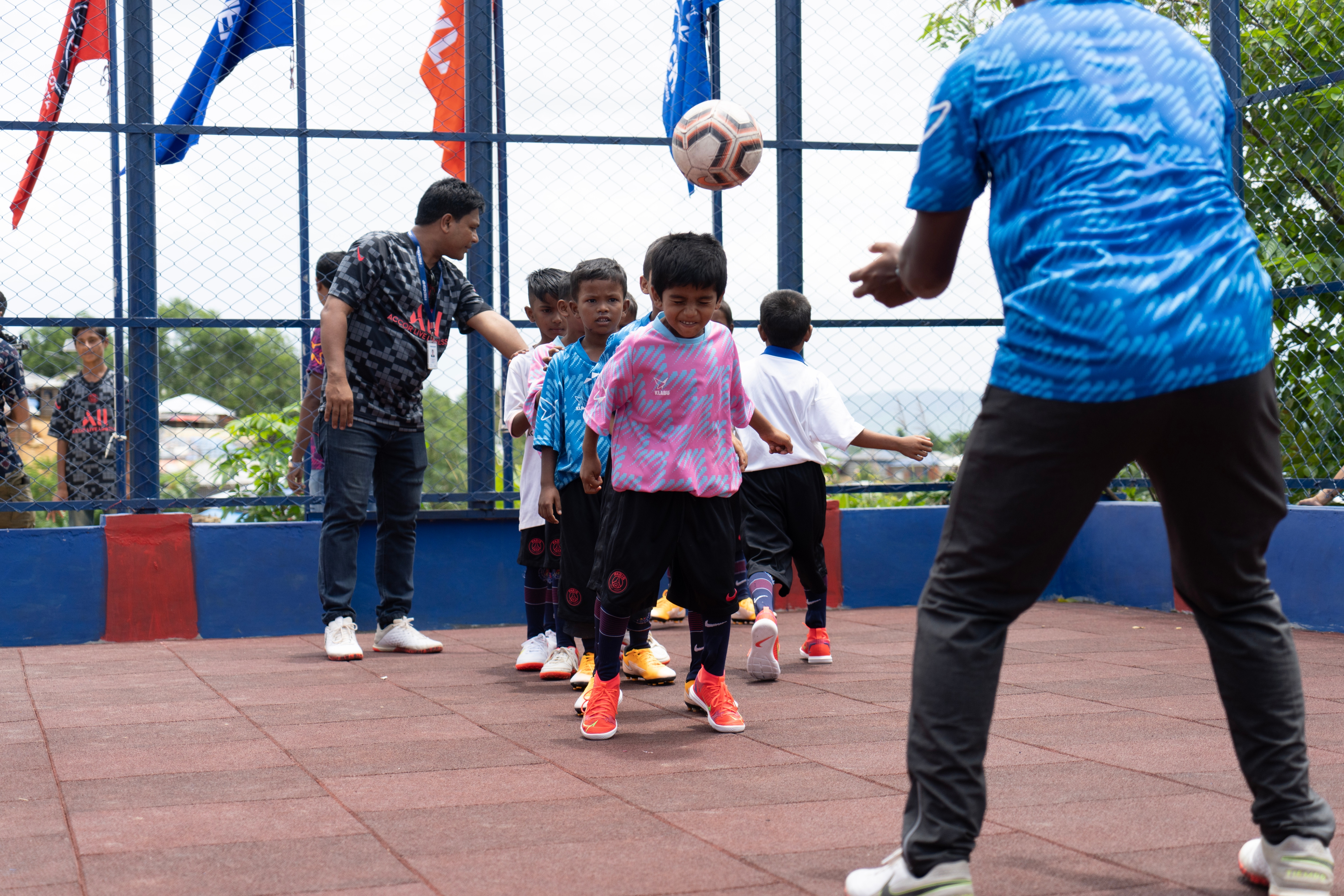 Hares enjoying the football training at the Club Centre in Cox's Bazar, Bangladesh
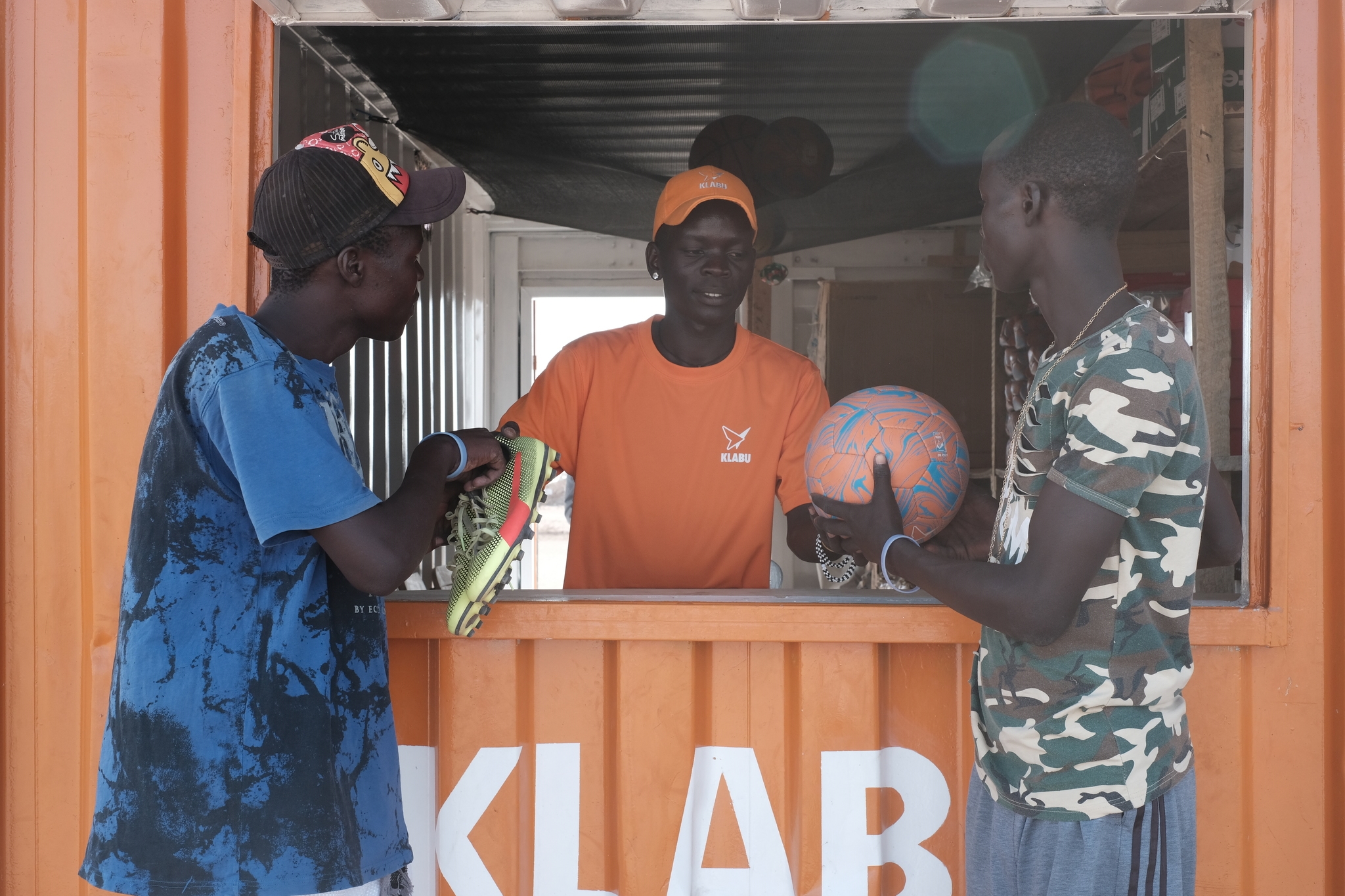 Sadumba, managing the KLABU Clubhouse in the Kalobeyei settlement, Kenya
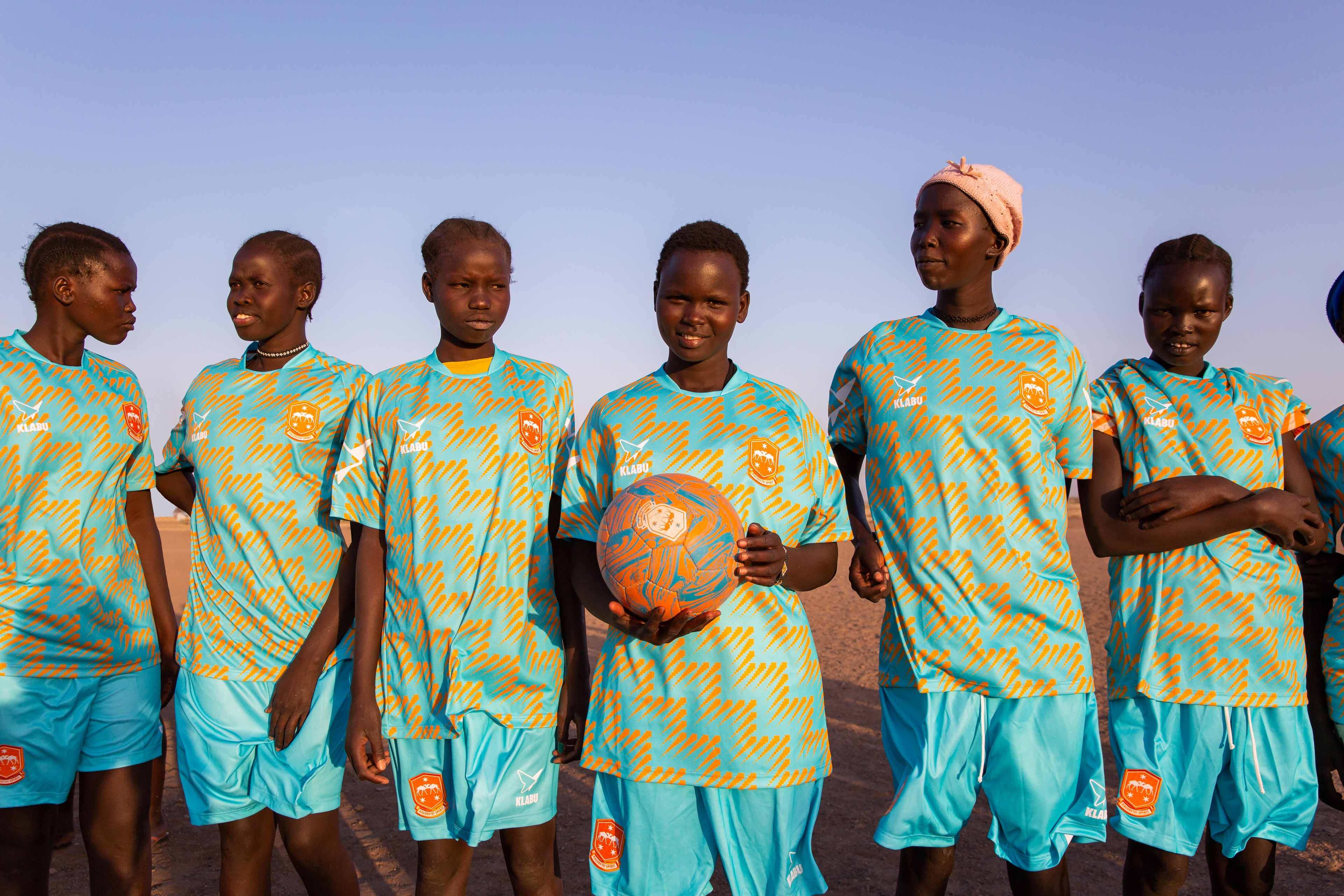 Girls' football team Kedong FC in Kalobeyei, Kenya
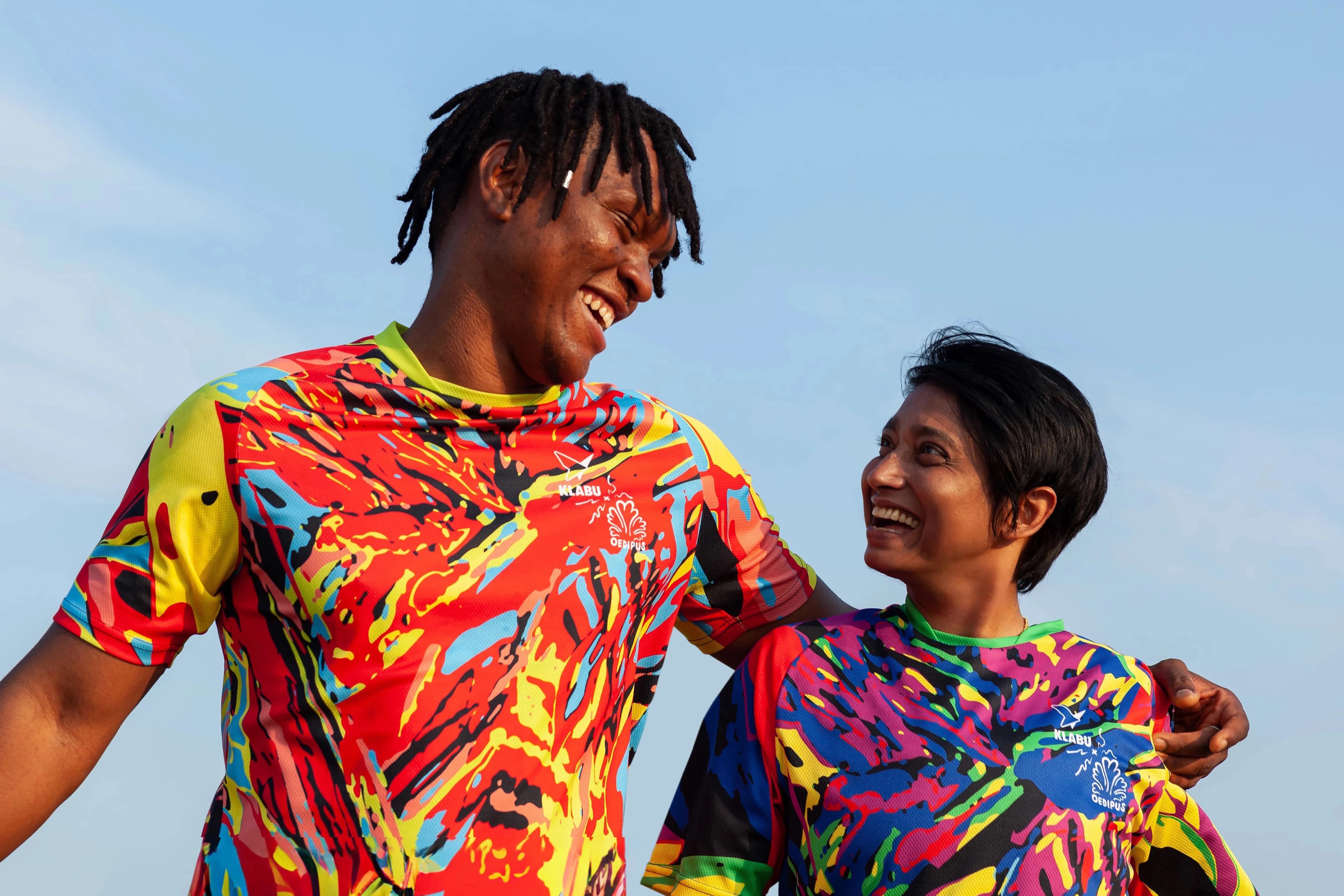 Mo and Atia from the KLABU Amsterdam community
Impact Goal 2 ("Connecting") - increasing acceptance and, ultimately, integration of refugees:
- Building bridges between refugees and host communities:
KLABU sports activities are an important vehicle for positive interaction and cooperation between refugee and local communities. Host community members, like refugees, engage in all the clubhouse activities. These interactions strengthen relationships and promote a more inclusive, peaceful and welcoming environment for all.
- Building bridges between refugees and the rest of the world:
Through sports and our KLABU sportswear brand, we aim to build bridges with the wider world. It increases awareness for the refugee cause and international goodwill and support. Seeing people around the world wearing KLABU sportswear also shows refugees they are supported and valued. And it will help us build the world’s biggest sports club!
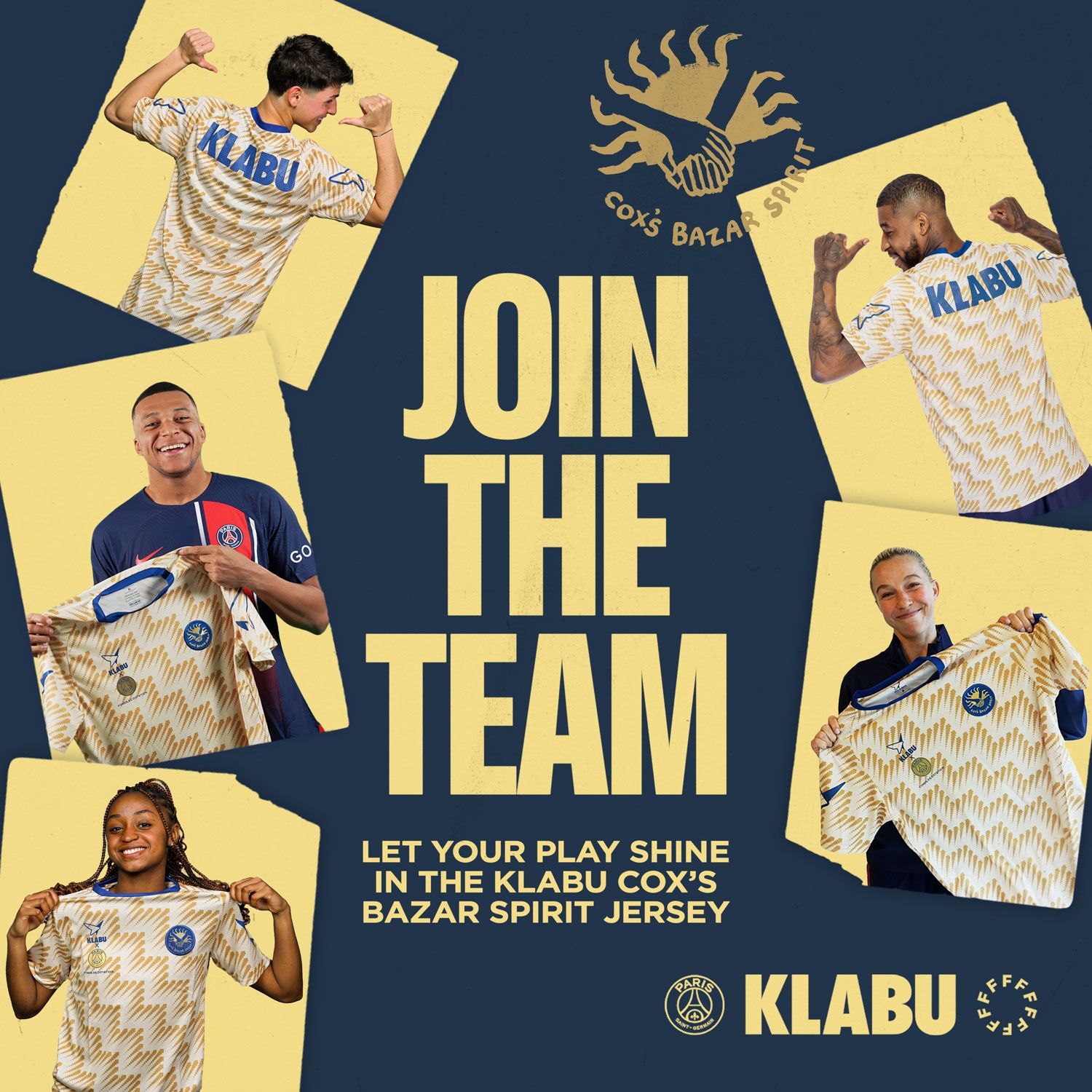
Paris Saint-Germain's support helps to build bridges and reframe perspectives on refugees
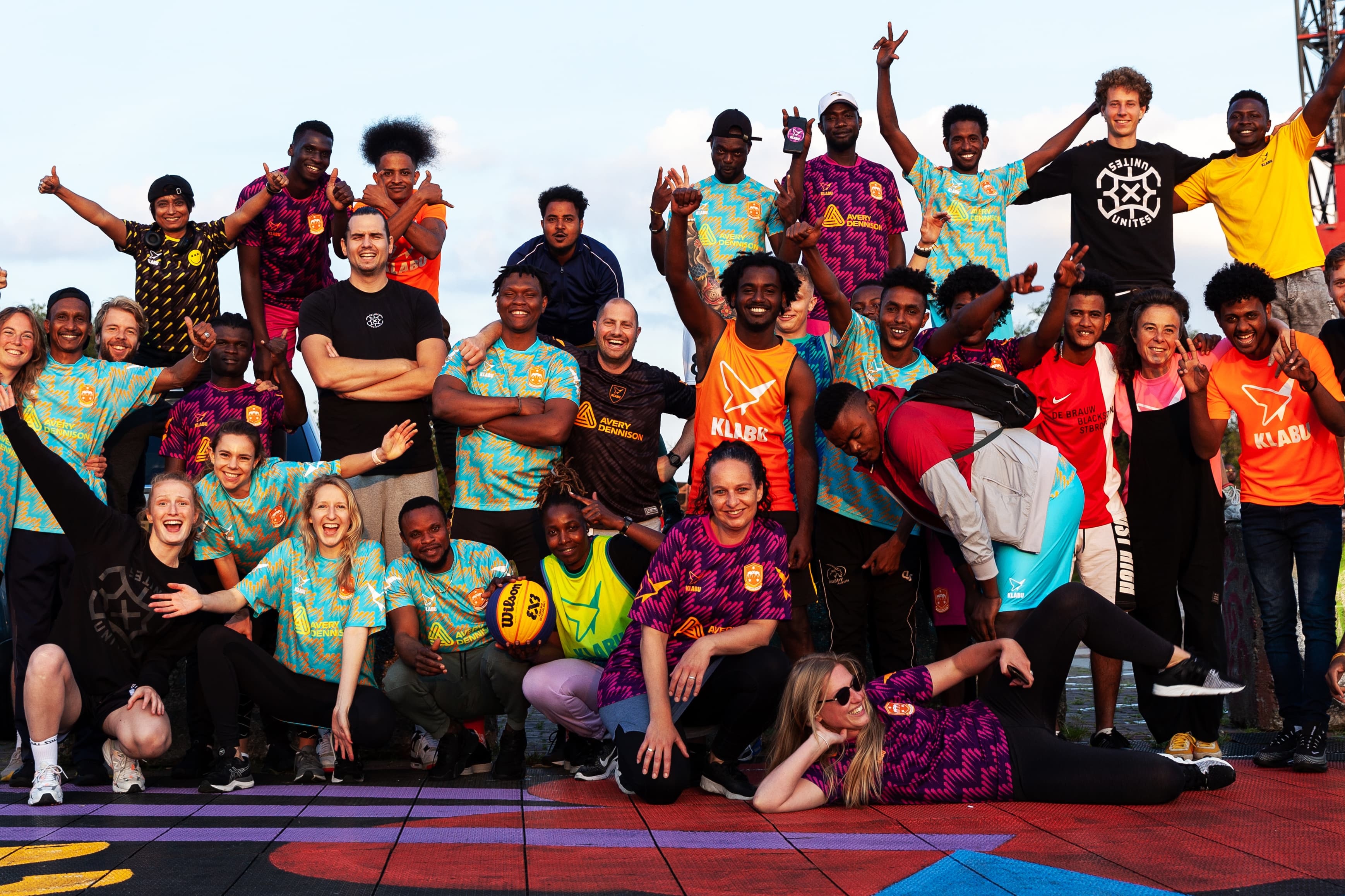
KLABU's Amsterdam workouts bring newcomers and locals together
This way, KLABU contributes to the United Nations' Sustainable Development Goals (SDGs), and enhances Environmental, Social and Governance (ESG) strategies:
- SDG 3 (Good Health & Wellbeing), SDG 4 (Quality Education), SDG 5 (Gender Equality), SDG 8 (Decent Work & Economic Growth), SDG 10 (Reduced Inequalities), SDG 11 (Sustainable Cities & Communities)
- Environmental impact: promoting environmental responsibility through eco-friendly solutions (e.g. containers, solar panels).
- Social impact: advancing social impact by promoting social cohesion and community building, enhancing physical and mental health, and increasing employment opportunities for refugees.
- Governance impact: strengthening governance through ethical collaboration and alignment with global standards.
"KLABU taught us to understand our potential and enhance it in our work. We feel like we are part of a team, that we have roles and a bridge to the outside world."
How do we know our approach is working?
At KLABU, impact always starts with listening to the community and grows through continuous learning and action. We believe the best way to achieve our impact goals is by staying close to the people who use and shape the clubhouse every day.
In the clubhouse, listening happens every day: through conversations after a game, organised feedback sessions, evaluation forms, qualitative interviews, and participation trends over time. Together, these different methods help us understand not only who comes to the clubhouse, but how the space affects people’s daily lives, wellbeing, confidence, and sense of belonging.
We then take time to learn from what we hear and see. By combining community feedback, participation data, and observations from clubhouse teams, we reflect on what is working, what may be missing, and where positive or negative change is happening.
From there, we improve and adapt. When data or feedback shows that something is not working, or that certain groups are not being reached, clubhouse teams can adjust their approach. This might mean redesigning activities, changing schedules, introducing new programmes, improving accessibility, or creating more inclusive spaces based on community needs. In this way, learning is not something separate from the clubhouse - it directly shapes how the clubhouse evolves.
And just as importantly, we celebrate. Through storytelling, campaigns, and community-led content, members can share their experiences, talents, and perspectives. By highlighting these stories both inside the clubhouse and through our online channels, we recognise the people behind the impact while also helping shift broader narratives around refugees.
This creates a continuous cycle of listening, learning, adapting and celebrating, allowing each clubhouse to grow and evolve alongside its community.
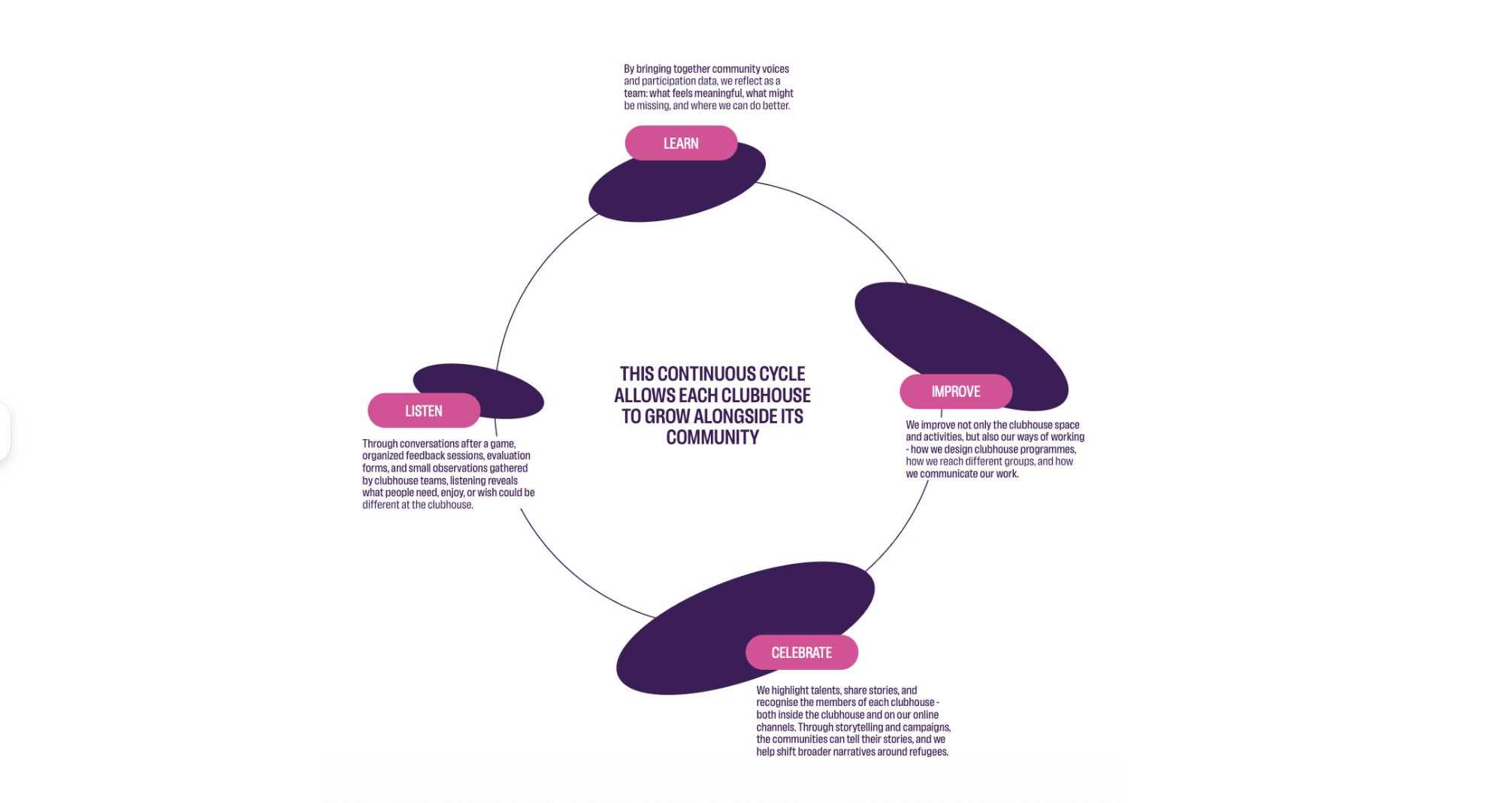
The Learning Cycle
How we measure our impact
To support this learning cycle, we have developed and continue to improve a comprehensive impact tracking system using Airtable. It allows us to centralise quantitative and qualitative information from our clubhouses, making it easier to visualise, analyse and report on our impact - both within KLABU and to our clubhouses, partners and the wider world.
Our local Clubhouse Managers are at the heart of this process. They track participation levels and collect information from their communities, which they share and store in our impact tracking system. The KLABU team brings this information together across clubhouses, giving us a clearer picture of our reach and progress towards the outcomes set out in our Theory of Change.
This shared system helps us keep track of our impact across different communities while giving clubhouse teams and the wider KLABU team a common view of what we are achieving.
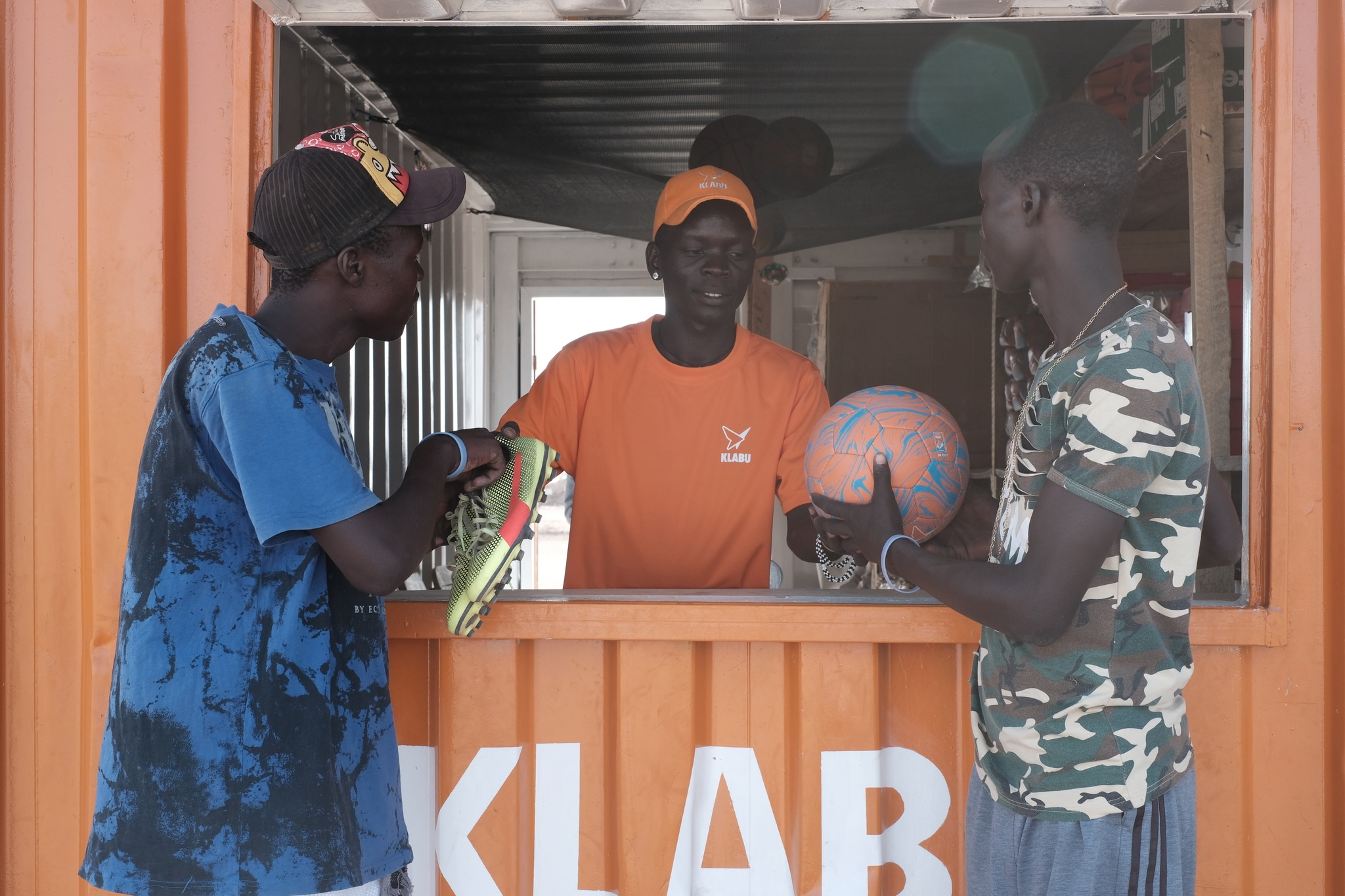
Our impact so far
Read our latest Impact Report 2025 here. Since our start in 2019, we launched 10 clubhouses across the globe: in Kenya, Bangladesh, Greece, Brazil, Mauritania, Jordan, Suriname, Poland and two in the Netherlands. In 2026, we will open one more clubhouses, expanding our reach to Uganda. This is central to KLABU's philosophy: building the world's biggest sports club to support refugees rebuilding lives.
Across our current locations, we have 45,000 participants every month that take part in daily activities that improve mental and physical wellbeing and enhance social cohesion and community building. Contributing to increasing employment opportunities and life skills, we employ 42 people including 27 refugees who run the projects with passion and love - making it their clubhouses. 30% of our active members are girls and women, contributing to their further empowerment. Furthermore, the teams are a mix of refugee and host community members, stimulating integration and inclusion and building bridges between refugees, host communities and the rest of the world.
Visit our clubhouse pages to read more about our impact.
read more
00:00
"I would say KLABU is one of the best things that have ever happened to me. Being with KLABU is like having a family away from home."